Centre for Radiation Research, Education and Innovation

Centre for Radiation Research, Education and Innovation photo

Advancing Australia’s radiation research and innovation, and providing specialised education and training

At the Centre for Radiation Research, Education and Innovation (CRREI), our mission is to deliver creative, timely solutions and services to the many industries involved in radiation-related activities.

Vision

Our vision is to be an internationally recognised centre for advancement of radiation research, education, training and innovation.

Qualified and licensed radiation professionals

We have radiation experts in many different areas, including in medicine, biology, food, mining, defence, environment, regulation and many other fields. Staff are embedded in CRREI’s cutting edge research projects and use the latest techniques for the quickest and most accurate results.

Explore our research

We advance cutting-edge radiation research and innovation across medicine, biology, food, mining, defence, environment, regulation and more.

Engage with us

We are dedicated to making Australian industries and communities safer and more educated in the field of radiation.

Explore the Centre for Radiation Research, Education and Innovation

CRREI was established to address several strategic opportunities in Australia, including

  • the expansion of uranium mining and processing
  • prospects for natural-sourced high value cancer radiation therapy radionuclides
  • the enhancement of SA’s Copper Strategy, with expertise gained through the ARC Research Hub for Australian Copper-Uranium
  • the management of Naturally Occurring Radioactive Material (NORM), providing support to the resources and energy sector
  • the establishment in SA of the Australian Radioactive Waste Agency
  • the introduction and expansion of proton therapy
  • the development of new and novel PET isotopes as part of the SA Health and Medical Research Institute (SAHMRI) biomedical precinct
  • addressing the critical skills gap in tertiary level radiation education
  • the provision of SA-based expertise in radiation and nuclear technologies, and education for the AUKUS defence program.

CRREI provides South Australia’s own commercial, high-throughput radioanalytical facility to deliver radiation-related services to industry, including the medical, uranium mining, mineral processing and energy sectors. In addition to the provision of radioanalytical facilities, CRREI can provide radiation consultancy in areas such as mining and environmental monitoring and assessment.

Applications of CRREI capabilities include:

  • radionuclide assay of ore and products for mining and mineral processing, utilising
    • gamma-ray spectrometry
    • alpha-particle spectroscopy
    • alpha-particle counting
    • alpha particle autoradiography o radiation monitoring and imaging
  • low-dose radiological assessment · medical radioisotope purity assessment
  • food irradiation testing (no existing regional capability)
  • geochronology - OSL and TL - for earth sciences, archaeology and palaeontology 
  • geochronology - Pb-210, Cs-137 dating, radioisotope dating · environmental contamination measurement
    • Retrospective Population Dosimetry
    • nuclear forensics
  • Atom Trap Trace Analysis (ATTA); hydrochronology, in collaboration with CSIRO
  • radiation-sensitive optical fibres and glasses
  • R & D creating novel radiation dosimetry/detectors
  • drone borne radiation sensors.
Work meeting team icon

Consulting services

CRREI provides in-house services, which include sample preparation, research and development, and results reporting.

Organisations hire our consultants to work as part of their research and innovation team, particularly for product research and development. This is a great way to invest in your future.

We can also make site visits at your place of work if you require a site assessment or inspection. Please contact us to discuss competitive rates.

Classroom teaching icon

Education

CRREI is working to establish a suite of tertiary radiation education courses at Adelaide University, including a graduate certificate, undergraduate degrees, short courses and micro-credentialing (e.g. professional development) to satisfy industry, government and research demand.

We are also working with national and international partner organisations to advance CRREI as a regional hub for education on nuclear technologies and their applications.

These partners include:

  • International Atomic Energy Agency (IAEA) 
  • Australian Radiation Protection and Nuclear Safety Agency (ARPANSA) 
  • Australian Nuclear Science and Technology Organisation (ANSTO) 
  • Commonwealth Scientific and Industrial Research Organisation (CSIRO).

At CRREI, we provide and grow networks throughout Australia to develop collaborative research grant opportunities.

We have expanded our research and education across multiple sectors, including:

Person icon

Modelling environmental and human exposure to radiation

Network icon

ARC Research Hub for Australian Copper-Uranium

Light bulb icon

Deep, high-precision analyses of noble gases

Digital icon

Real-time radionuclide sensors

Dial icon

Alpha-particle autoradiography – spatial localisation of alpha emitters

Chart icon

3D imaging dosimeters for detecting medical gamma radiation

Plane icon

Rapid, wide-area radiation mapping using unmanned aircraft

Fruit vegetable crate icon

Food irradiation detection

Book icon

Radiobiological effects of inhaled radon gas.

Exemplars

In 2020, we commenced a collaboration with CSIRO, the South Australian Government and ANSTO, initiating a radiation research project into bush food biosphere modelling. This data is particularly important for use in future environmental impact statements and potential landscape remediation strategies. This work is now part of an International Atomic Energy Agency Collaborative Research Project, with ANSTO to also look at burrowing animals in the Maralinga area.

We continue to expand research into low-dose radiobiological effects such as radon effects in the lung, a particularly important topic for underground mining operations. This is a five-year collaboration between CRREI, the Northern Ontario School of Medicine and Laurentian University (Ontario, Canada). This project has now expanded to be part of a collaborative Global Underground Laboratory Network with radiation biology experiments to be conducted in the Stawell Underground Physics Laboratory (SUPL).

Our team consists of experts from multiple disciplines, all with strong experience in:

  • high quality research
  • innovation and commercialisation
  • education and training.


Our team

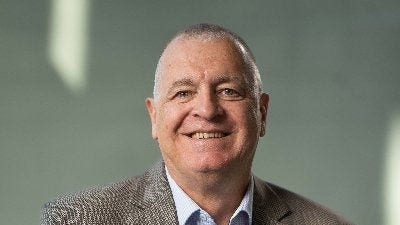
Associate Professor Tony Hooker

Director Centre for Radiation Research, Education and Innovation
Email: tony.hooker@adelaide.edu.au

Associate Professor Tony Hooker photo
  • Professor Nigel Spooner
  • Professor David Ottaway
  • Mr Michael Hennessey
  • Dr Kate Flint
  • Dr James McEvoy-May
  • Dr Alexandra Chapsky

CRREI is growing and providing a network nationally and internationally to develop collaborative research and provide internationally recognised education programs.
 

Our partners include:

  • International Atomic Energy Agency (IAEA)
  • Australia's Nuclear Science and Technology Organisation (ANSTO)
  • Australian Radiation Protection and Nuclear Safety Agency (ARPANSA) 
  • Commonwealth Scientific and Industrial Research Organisation (CSIRO) 
  • Northern Ontario School of Medicine University, Ontario, Canada 
  • Laurentian University, Ontario, Canada · University of Rome Tor Vergata, Italy · Hirosaki University, Japan 
  • National Energy Resources Australia (NERA) 
  • SA Government Department for Energy and Mining 
  • South Australian Health and Medical Research Institute (SAHMRI) 
  • BHP
  • Hirosaki University, Japan

Contact us

Centre for Radiation Research, Education and Innovation

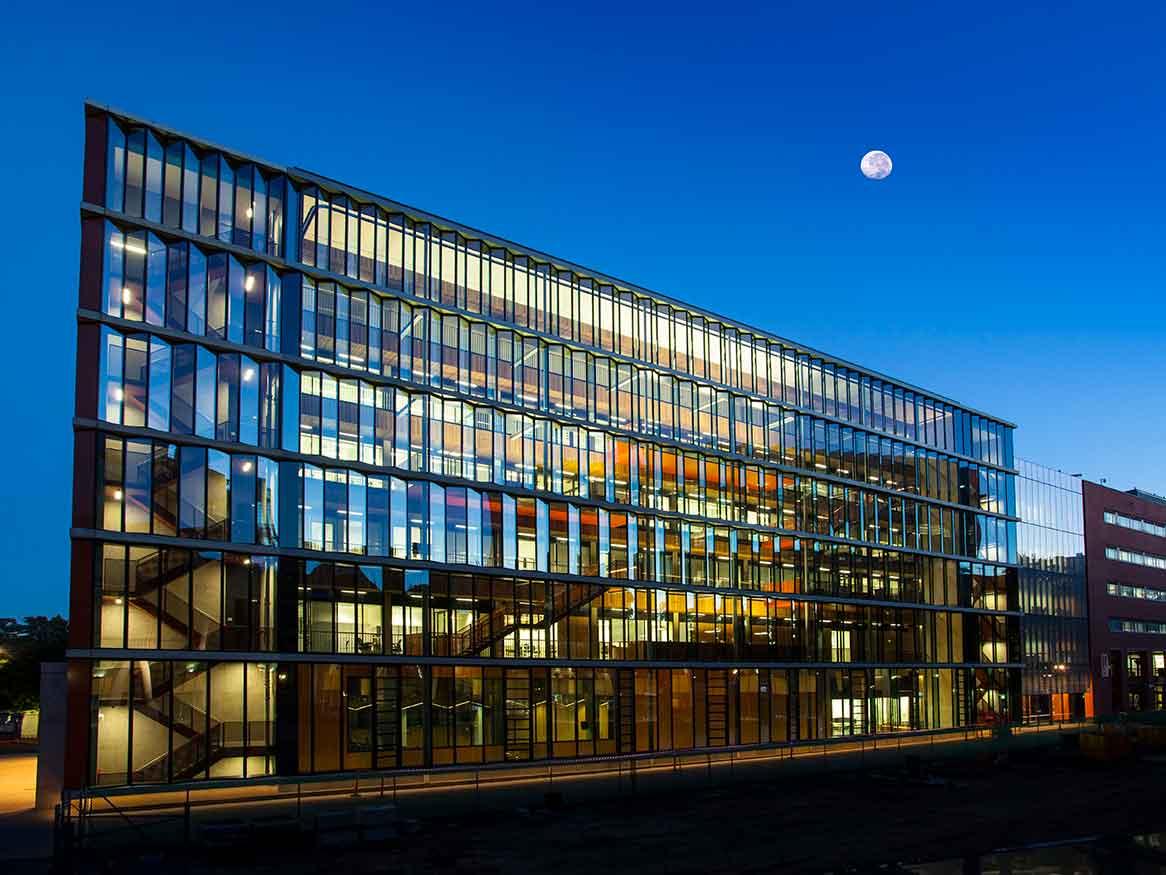
The Centre for Radiation Research, Education and Innovation has its physical centre, including laboratories and offices, within The Braggs Building at Adelaide University Campus East. We are co-located with Adelaide Microscopy and an Atom Trap Trace Facility.

Enquiries can be directed to the Centre Director, Associate Professor Tony Hooker.

Location

Location
Centre for Radiation Research, Education and Innovation
Adelaide University
The Braggs Building, City Campus east, Adelaide SA 5095

Telephone

Phone: +61 8 8313 2326

Email

Email: tony.hooker@adelaide.edu.au