Australian Centre for Antimicrobial Resistance Ecology

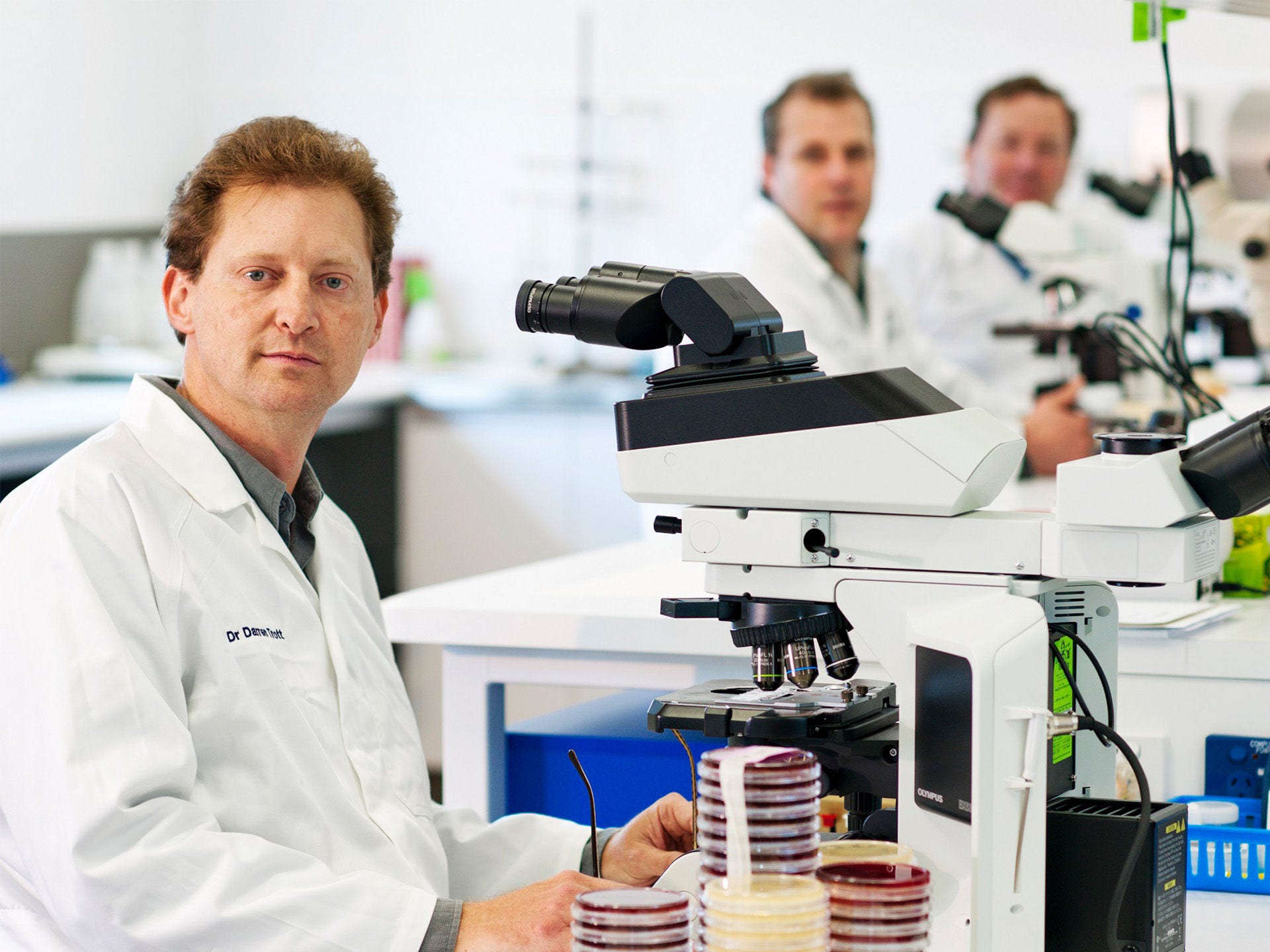
ACARE lab equipment image

Finding solutions to antimicrobial resistance using a One Health approach

Antimicrobial resistance (AMR) is a global One Health issue of growing importance. AMR occurs when bacteria, viruses, fungi, and parasites no longer respond to antimicrobials. The Australian Centre for Antimicrobial Resistance Ecology is unique in conducting research to both mitigate resistance to existing antimicrobials in humans, animals, agrifood, and the environment whilst also developing the novel therapeutics and preventatives of the future.

Our mission is to conduct research that contributes to reducing the impact of AMR in humans, animals, plants, and the environment within Australia, whilst simultaneously investing in novel drug development, bacteriophage therapies, and vaccines to impact AMR on a global level.

Explore our research

Uncover how ACARE researchers are tackling the global threat of superbugs and antimicrobial resistance. Explore our cutting-edge genomics and therapeutics research.

Engage with us

The Australian Centre for Antimicrobial Resistance Ecology (ACARE) offers contract research and diagnostic services to industry and other research organisations.

Explore the Australian Centre for Antimicrobial Resistance Ecology

We bring together a team of expert researchers focused on understanding and combating AMR while training a new generation of multidisciplinary scientists.

ACARE’s research covers six major themes:

DNA icon

Microbial genomics and ecology

Test tube icon

Novel preventatives and therapeutics

Petri dish icon

Host-pathogen interactions

Wheat crop icon

Agrifood and environmental health

Security camera icon

Surveillance and epidemiology

Security sheild icon

Zoonoses and biosecurity

We are dedicated to tackling the global threat of Antimicrobial Resistance (AMR) by fostering a multidisciplinary approach across human, animal, plant and environmental health, often referred to as 'One Health.' ACARE's core research capabilities are grouped into six major, interconnected themes. Our Microbial Genomics and Ecology group study the evolution and movement of AMR genes and strains, particularly for critically important antimicrobial-resistant Gram-negative bacteria, across human, animal, and environmental systems. This is paired with research into Novel Preventatives and Therapeutics, where we develop innovative solutions to combat multidrug-resistant bacterial, viral and parasite superbugs, including the targeted design of new drugs, dual therapies, and efflux inhibitors. The Centre has an excellent background in AMR Surveillance and Epidemiology, having undertaken some of the first AMR surveillance projects in food-producing and companion animals in Australia. Our scientists focusing on Host-Pathogen Interactions undertake research on bacterial, viral and parasite pathogenesis particularly in some of the most significant infectious diseases of animals and humans. Emerging strengths in Agrifood and Environmental Health and Zoonoses and Biosecurity are significantly boosted at Adelaide University through partnering with the Cooperative Research Centre for Solving Antimicrobial Resistance in Agribusiness, Food and Environments (CRC-SAAFE) and the ARC Training Centre for Environmental and Agricultural Solutions to Antimicrobial Resistance (CEA-StAR).

ACARE offers extensive specialist services to industry partners and pharmaceutical companies, including contract research and services for product registration. Key service offerings include comprehensive AMR testing and screening for human, animal, and environmental samples, establishing extensive isolate collections, and performing Minimum Inhibitory Concentration (MIC) testing and risk assessments for new veterinary products. These services utilise specialist facilities and cutting-edge technology. Bruker MALDI Biotyper bacterial identification services are delivered through a collaborative arrangement with Adelaide University’s Roseworthy Veterinary Hospital Pathology Diagnostic Laboratory, ensuring high-quality scientific solutions for AMR control.

A core achievement of ACARE’s previous work, together with the Davies Livestock Research Centre is the reinforcement of Australia’s "clean and green" status as a producer of high quality animal protein with minimal AMR risk to the consumer. Rates of AMR in Australian livestock pathogens and commensal bacteria remain low by international benchmarks. This evidence is vital for ensuring the sustainability and competitiveness of the South Australian food and wine industry, which contributes billions to the state’s economy. Investment in new vaccine technology to prevent animal infections also reduces reliance on antimicrobials to maintain optimal animal health and production.

Beyond economic assurance, ACARE actively works to mitigate future health threats. Our strengths in Microbial Genomics and Ecology and Novel Preventatives and Therapeutics translate into tangible research achievements, such as developing new drug classes, dual therapies, and efflux inhibitors to combat bacterial, viral and parasite multidrug-resistant superbugs. Additionally, the Parasitic Diseases Research Group is developing new drugs and vaccines for debilitating human and livestock parasitic infections in partnership with industry.

ACARE's outputs directly align with and support the National Antimicrobial Resistance Strategy and national priorities for improving health outcomes, ensuring our research has a direct line to policy and practice. We also contribute to the scientific community by training a new generation of multidisciplinary scientists, with opportunities for PhD and Masters of Philosophy research in various disciplines across our collaborative projects.

Professor Darren Trott

Director Australian Centre for Antimicrobial Resistance Ecology
Email: darren.trott@adelaide.edu.au

Professor Darren Trott

Dr Stephen Kidd

Deputy Director Australian Centre for Antimicrobial Resistance Ecology
Email: stephen.kidd@adelaide.edu.au

Dr Stephen Kidd

Centre members

  • Dr Andrew Hao, Researcher – Bacteriophage biology
  • Dr Anna Sheppard, Researcher – Genomics and bioinformatics
  • Associate Professor Barbara Drigo, Researcher – AMR Ecology, Food and Water Safety
  • Dr Ben Liffner, Future Making Fellow – protozoal cell biology and anti-infective development
  • Professor Darren Trott, ACARE Director – New anti-infectives and vaccines for animal diseases
  • Associate Professor Danny Wilson, ARC Future Fellow – New anti-infectives and vaccines for protozoa infections
  • Associate Professor David Ogunniyi, NHMRC Senior Research Fellow – New anti-infectives and bioluminescent mouse models of infection
  • Adjunct Associate Professor Esmaeil Ebrahimie, Researcher – Bioinformatics and biostatistics
  • Professor Erica Donner, Research Director – CRC SAAFE; Research Professor, Future Industries Institute – Environmental AMR CRC-SAAFE
  • Associate Professor Farhid Hemmatzadeh, Researcher – Mycoplasma and new vaccine development
  • Dr Hang Nguyen, NHMRC/CEA-StAR Research Fellow – New anti-infectives and bioluminescent mouse models of infection
  • Dr Jessica Webb, Researcher – Pathogen genomics and bioinformatics
  • Associate Professor Katharina Richter, Future Making Fellow – New anti-infectives for bacterial biofilm/infections
  • Associate Professor Keith Shearwin, Researcher – Bacteriophage biology
  • Dr Kandarp Patel, Researcher – AMR epidemiology
  • Associate Professor Kiro Petrovski, Researcher – AMR in dairy cattle / New anti-infectives
  • Dr Manijeh Mohammadi Dehcheshmeh, Researcher – Microbiome and biostatistics
  • Dr Maria Gancheva, NHMRC/CEA-StAR Research Fellow – Novel antiprotozoa drugs and vaccines
  • Dr Mary Carr, Head of Collaboration (Research and Impact)
  • Dr Mary McQuillan, Researcher – AMR in small ruminants/Mycoplasma
  • May Song, Researcher – Novel anti-infectives (formulation chemistry)
  • Dr Melanie Ridgway, Researcher – Anti-infective development and resistance
  • Associate Professor Milton McAllister, Researcher – AMR in feedlot cattle; protozoa
  • Dr Permal Deo, Researcher – Food safety
  • Dr Peter Atkinson, Researcher – AMR epidemiology
  • Associate Professor Rietie Venter, Researcher – Novel Antimicrobial Efflux inhibitors
  • Associate Professor Ryan O’Handley, Researcher – New anti-protozoal vaccines and anti-infectives; bacterial biofilms
  • Professor Sanjay Garg, Researcher – Novel anti-infectives (formulation chemistry)
  • Associate Professor Sarah Vreudge, Researcher – Bacteriophage therapy
  • Dr Stephen Kidd, ACARE Deputy Director and Researcher – Stress response in bacterial pathogens
  • Dr Surita Du Preez, Researcher – AMR in horses
  • Sylvia Sapula, Researcher – AMR Surveillance and molecular epidemiology
  • Dr Tatiana Soares da Costa, ARC Future Fellow – Novel anti-infectives and herbicides
  • Associate Professor Wayne Boardman, Researcher – AMR in wildlife/environment
  • Davies Livestock Research Centre
  • Centre for Pharmaceutical Innovation
  • Waite Research Institute
  • CRC-SAAFE 
  • CEA-StAR
  • Meat and Livestock Australia
  • Australian Pork Limited and Australian Pig Research and Investment Ltd
  • Aquila Scientific

Contact us

Australian Centre for Antimicrobial Resistance Ecology

Australian Centre for Antimicrobial Resistance Ecology members operate from all Adelaide University campuses.

Location

Location
Australian Centre for Antimicrobial Resistance Ecology
Adelaide University
Leske Room G3, Roseworthy Campus, Roseworthy SA 5371

Email

Email: darren.trott@adelaide.edu.au