Andy Thomas Centre for Space Resources

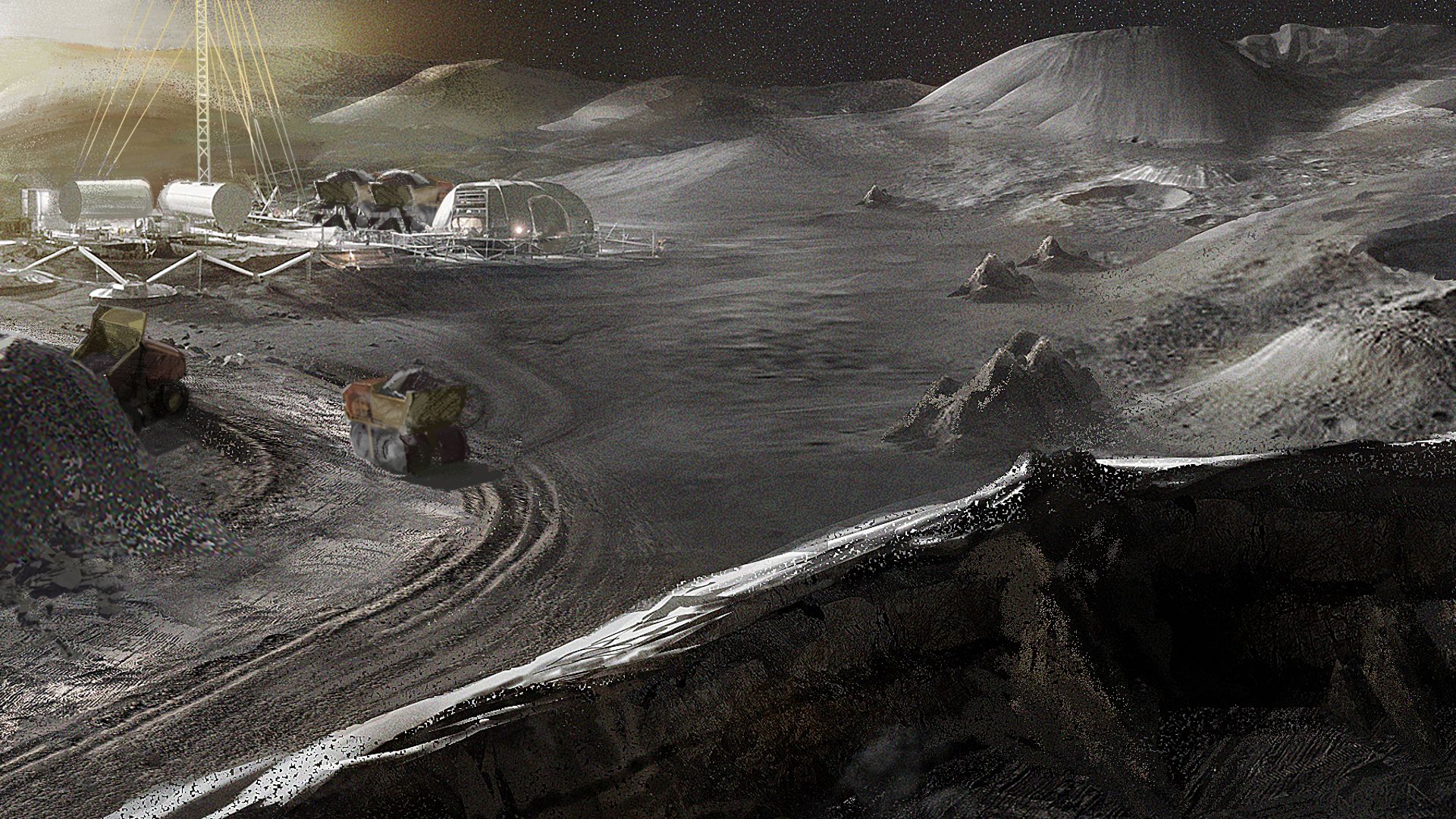
Schematic drawing

Enabling long term human habitation in deep space

As a globally connected Australian space research centre, the Andy Thomas Centre for Space Resources (ATCSR) engages with space-focused companies, government agencies and research organisations around the world. The ATCSR is involved in a broad range of research, commercial and educational initiatives, all with the mission of enabling long-term human habitation of deep space and contributing to the return of humans to the Moon and on to Mars.

The Centre’s inclusion of law, psychology, architecture, agricultural and artistic expertise alongside civil and mechanical engineering, computer science and mechatronics creates a unique interdisciplinary environment for tackling the challenges and opportunities facing humans living far from Earth.

The Andy Thomas Centre for Space Resources is named after Dr Andy Thomas AO – Australia’s NASA astronaut – flying four shuttle missions and spending a total of 177 days in space.

Explore our research

Our research explores practical technologies, processes and frameworks for sustainable space exploration, ensuring the safety and wellbeing of long-term mission crews and with benefits both off-world and here on Earth.

Engage with us

Join the ATCSR's mission in supporting long term human habitation of deep space and the sustainable use of in-situ resources.

Explore the Andy Thomas Centre for Space Resources

The ATCSR is continually building its research activity across a range of disciplines related to long term deep space habitation. This is realised through the combination of expertise in resource exploration and utilisation; off-world engineering and architecture; autonomy and robotics; as well as numerous other professional and social science disciplines such as law and human psychology.


Our ATCSR research groups

Construction icon

Lunar construction

Focused on fundamental geotechnical, geological and construction-based research activities.

Space icon

Deep space habitation

Bringing together our social science researchers with their engineering, robotics, artificial intelligence/machine vision, and science colleagues. This group provides a unique platform for discussing topics such as space law, astronaut/robotic interaction, and the use of architecture and psychology to ensure human well-being during long duration missions.

Law icon

Space law, policy, and governance

Works to research, operationalize, and shape the development of international space law relevant to ATCSR activities.

Rocket icon

Astronaut autonomy teaming

Explores the critical enabler of space robotics and how they seamlessly and safely work with and enhance crew operation in space and on planetary surfaces.

Mind thinking icon

Stellar psychology

Researching human performance in extreme environments, stress mitigation, situational awareness, crew dynamics, astronaut selection, and long-distance mental health support.

Blueprints icon

Lunar architecture

At the intersection of In Situ Resource Utilization (ISRU) and robotic construction, this group investigates new sustainable frameworks for off-Earth construction with the efficient use of new materials and technologies. This group examines the psycho-social effects of being in an isolated alien environment, and the role architecture can play in ensuring our wellbeing for deep space habitation.

With long term human habitation of deep space as our mission, the Centre focuses its efforts on three main areas:

Planet icon

Off-Earth surface infrastructure

Team people icon

Human space exploration and settlement

Information technology icon

Autonomous systems and AI

Within these three areas, our programs span a range of multidisciplinary topics that directly relate to our mission of enabling long term deep space habitation and providing a safe and sustainable operation environment for all space mission crews. With collaborators in Australia and around the world, our current range of research programs include:

  • Geotechnical investigations of lunar regolith (simulants)
  • Lunar construction materials and architectural design
  • Site preparation for lunar surface operations
  • Soft robots and swarm robotics for extreme environments
  • Robotic vision and AI for space
  • Rover payload development
  • Human-robot teaming
  • The legal frameworks for deep space habitation
  • Agricultural research in extreme and hostile environments
  • Long term mission crew operations and safety.

Centre researchers contribute to the development and planning of a range of lunar missions including Australia’s first lunar rover – Roo-ver, ARTEMIS payloads and technologies being developed for lunar surface operations.


Roo-ver mission

The ATCSR is a partner in the Australia’s Roo-ver Mission, the Nation’s first lunar rover, being designed, built and tested in Australia. Traveling to the Moon later this decade, Roo-ver will explore the lunar surface, and working with NASA will examine the composition of the regolith looking for critical resources such as water.

Roo-ver will spend time in the Centre’s EXTERRES Facilities, testing its ability to traverse and navigate the lunar surface in the Centre’s purpose-built lunar analogue environment. This will help evaluate the Roo-ver’s design and assess its onboard systems in preparation for its 14-day mission on the surface of the Moon.

Underpinning a significant number of the ATCSR’s research, education and outreach activities are the Extraterrestrial Environment Simulation (EXTERRES) facilities. These facilities house state-of-the-art laboratories and experimental equipment specifically designed to simulate a range of off-Earth environmental and settings.

The EXTERRES Laboratory (North Terrace Campus) and Analogue Facility (Roseworthy Campus) house the most advanced and comprehensive facilities for lunar surface environmental simulation in the Southern Hemisphere. Researchers and members of the space industry can access thermal and regolith vacuum chambers, rover testbeds (both sand and lunar regolith simulant), vacuum furnaces and other key experimental infrastructure to develop technologies destined for off-Earth application.

The newly commissioned Covered Regolith Analogue for Testing and Experimental Research (CRATER) Facility further expands ATCSR capabilities, offering solutions for the study of robotic vision, navigation and mobility in extreme environments (including regolith, lighting, gravity off-load), human-robot teaming, and full mission concept of operations (con-ops).

These globally rare Australian-based facilities are critical in supporting National space research and educational efforts as well as servicing the space industries own research and development efforts.

Leadership team

  • ATCSR Director: Associate Professor John Culton
  • ATCSR Centre Manager: Miles Davies


Each ATSCR research group is led by an Adelaide University Chief Investigator with strong links to both the global research community and industry.

Our partners

Space research

The ATCSR brings together a broad range of engineering, scientific and commercial expertise from across Adelaide University to address the challenges of long-term planetary exploration and living in off-Earth environments.

Working closely with our industry, government and academic partners, ATCSR researchers and students are actively engaged in projects that test ideas and seek solutions to these challenges. Our research explores sustainable and functional solutions that are practical, productive and ensure the safety and well-being of mission crews.

Australian Society for Off-Earth Construction

The Australian Society for Off-Earth Construction (ASOC) is dedicated to facilitating the development and translation of Australia's expertise in construction in off-earth environments.

The Society is a vehicle for facilitating off-earth construction solutions via:

  • investment
  • research and development
  • production
  • manufacture
  • application
  • commercialisation.

ASOC brings together like-minded individuals and organisations involved with construction and infrastructure development off-Earth. It can also inform stakeholders in adjacent and related areas such as robotics, mining and in-situ resource utilisation (ISRU), energy, defence, agriculture, and medicine.


Get involved

Australian Rover Challenge

Founded in 2021 by the ATCSR, the Australian Rover Challenge (ARCh) is a four-day robotics competition that sees tertiary student teams from Australia and around the world design and build semi-autonomous remotely operated rovers and test them against a range of realistic tasks set on the lunar surface. These tasks take inspiration from a variety of source including NASA’s requirements for lunar surface operations and the Australian Space Agency’s Roo-ver Mission.

The ARCh takes place at the ATCSR’s Roseworthy Analogue Facility each March and is open to industry, schools and the public. More information can be found on the ARCh website.

Australian Society for Off-Earth Construction

The Australian Society for Off-Earth Construction (ASOC) was established in 2021 to support the development and translation of Australia's expertise in off-Earth construction. The goal of ASOC is to bring together like-minded individuals and organisations involved with construction and infrastructure development off-Earth. The ASOC is an avenue for stakeholders to engage with those in adjacent and related fields such as robotics, mining and in-situ resource utilisation (ISRU), energy, defence and agriculture.

The Society also runs the International Symposium on Off-Earth Construction (ISOC). Held annually, ISOC is open to those with a desire to join the growing community of researchers, industry professionals and government representatives with an interest in off-Earth construction and civil engineering.

Contact us

Andy Thomas Centre for Space Resources

Location

Location
Andy Thomas Centre for Space Resources
Adelaide University
City Campus East, Adelaide SA 5000

Telephone

Phone: +61 8 8313 0574

Email

Email: atcsr@adelaide.edu.au