
Cancer research

Banner

Together, we’re redefining the future of cancer research

At Adelaide University, we’re bringing together some of South Australia’s brightest scientific minds to take on one of the greatest health challenges of our time.

Across our research centres, our experts are working side by side — from molecular biologists and immunologists to clinicians, data scientists, and population health researchers — to prevent, detect, and treat cancer, and to support people living with its impacts.

We are truly tackling cancer from every angle:

  • Understanding why cancer develops at the genetic and cellular level, to uncover new ways to stop it before it starts.
  • Developing personalised and precision therapies that target cancer cells while protecting healthy ones.
  • Using big data and population research to identify risks, improve early detection, and deliver better outcomes for more people.
  • Finding ways to reduce pain and side effects during and after treatment, so survivors can live well beyond cancer.
  • Collaborating across disciplines, from laboratory discovery to bedside application, ensuring breakthroughs benefit patients faster.

This collaborative and translational approach unites the strengths of our cancer research community to ensure that every insight has the power to reach across cancer types and transform more lives.

When you donate to cancer research at Adelaide University, 100% of your gift goes directly to the cause – fuelling innovation, supporting world-leading researchers, and giving hope to everyone affected by cancer.
Researcher highlight

Cutting off cancer’s lifeline

What if we could stop aggressive breast cancers by simply starving them of what they need to survive? That’s the question driving Associate Professor Claudine Bonder and her team at Adelaide University.

Cancers need a blood supply to grow and spread. Without blood they cannot get the oxygen or nutrients they need to survive. 

While most breast cancers hijack nearby blood vessels to feed themselves, the most aggressive types go a step further — they build their own blood vessel-like structures. These cancer-made networks are tough, sneaky, and resistant to many existing treatments.

“These cancer-formed blood supply structures are particularly difficult to destroy with current therapies. Roughly 30% of the blood supply to these fatal breast cancers is made up of these structures” says Prof Bonder. 

Her team has identified a key growth factor — a kind of chemical messenger that helps cells grow and survive — that drives both the hijacking and the self-building of these blood supplies.

“We are testing a product that can bind to this growth factor and silence it,” Claudine explains.

If the growth factor can be shut down, the cancer can be starved, cutting off its lifeline.

This breakthrough approach could lead to new treatments for people with the most aggressive breast cancers and may offer hope for other hard-to-treat cancers such as advanced melanoma. 

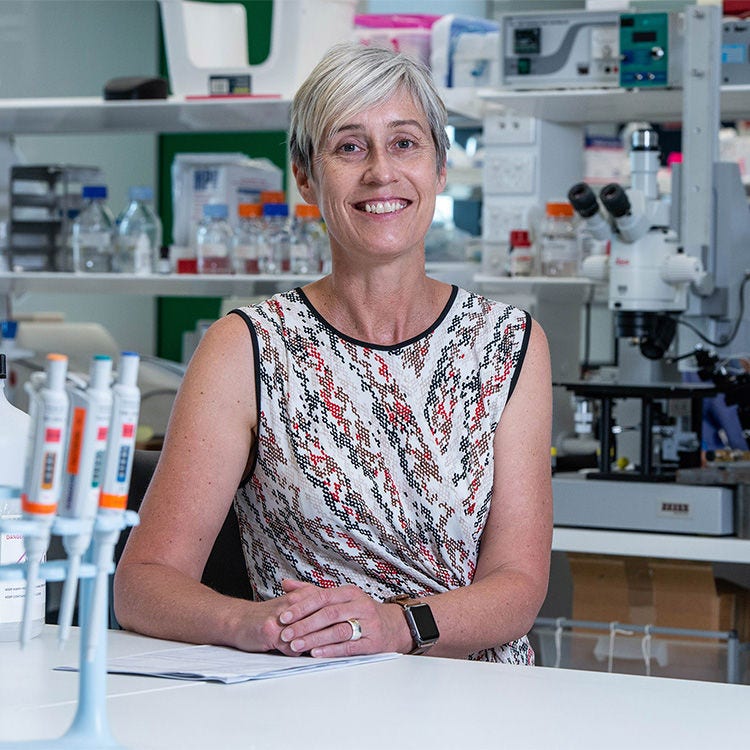
Associate Professor Claudine Bonder, a leading vascular biology specialist.

Associate Professor Claudine Bonder, a leading vascular biology specialist.

Make a donation

Donation form coming soon.