Copyright Overview

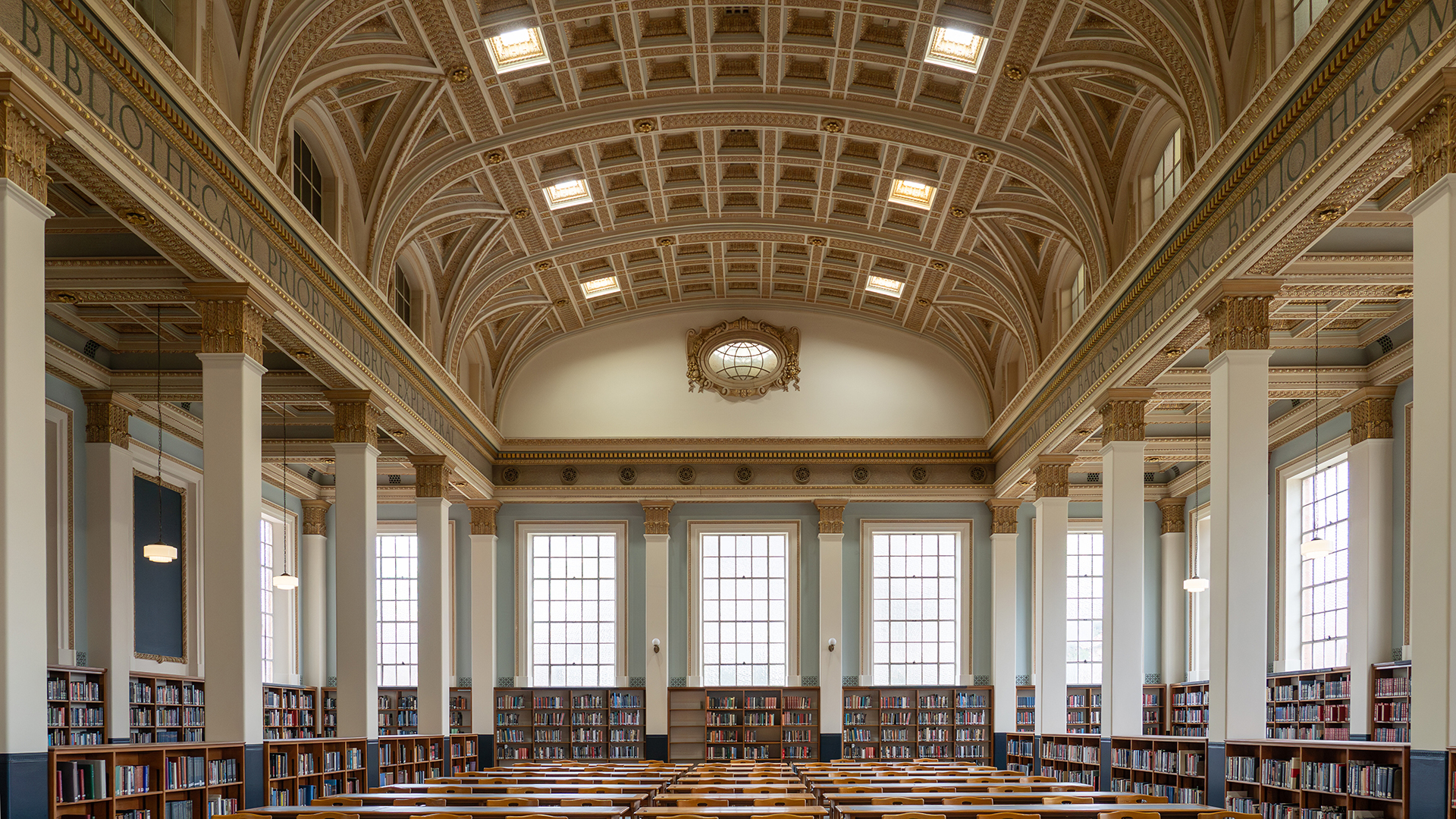
placeholder image

How copyright works

Copyright is a form of intellectual property. It grants exclusive rights to the copyright owner to protect their work for a limited period. These rights are balanced somewhat by a range of exceptions that permit use in certain circumstances.  

It is regulated in Australia under the Copyright Act 1968 as well as various international treaties.    

How Copyright Works by John Gibbs, YouTube 

Copyright ownership

The author(s) of a work is generally the copyright owner(s) unless copyright in their work has been assigned through employment or contract.

There may be more than one copyright owner in works with joint authorship or in an item that consists of multiple copyrights (see Types of Protected Material section below).

At Adelaide University the Intellectual Property Policy provides that, in most circumstances:

  • Students retain copyright in their assignments and theses.
  • Staff retain copyright in their research publications.
  • The University attains the copyright in teaching and other materials, developed in the course of their employment.

Types of protected material

For an item to protected by copyright it must be:

  • Original (authored).
  • In a material form (captured on media).
  • Capable of being categorised in one of the types of protected material below. 

Copyright generally, does not protect ideas, concepts, facts, methods or names.

Works

LiteraryArtisticMusicalDramatic

Books

Journal articles

Poems

Exam papers

Computer code

Paintings

Drawings

Sculptures

Photographs

Diagrams

Melodies

Music notation

Film scores

Composition files

Plays

Screenplays

Mime

Choreograph 


Subject Matter Other than Works  

Films

SoundRecordings

Broadcasts

PublishedEditions

Motion pictures

TV programs

Interactive games

Animations

Music recordings

Podcasts

Interviews

Sound effects

Radio broadcasts

TV broadcasts

Podcasts of above

Typesetting

Layout

It's possible for more than one type of copyright to exist in an item. For example, a vinyl record is typically protected with multiple layers of copyright, consisting of the following:

  • Sound recording for the audio track. 
  • Musical work for the underlying musical composition.
  • Literary work for the song lyrics.
  • Artistic work for the cover art.
  • Published edition for the cover layout.

It's useful to be able to identify the different copyright components in an item as each may have distinct associated rights, durations, and ownership.

Economic Rights

Copyright doesn’t just apply to copying; there is a bundle of distinct, exclusive rights for each material type. If another party exercises any of these rights they may be infringing the copyright unless they have a suitable licence or permission, or they can establish a fair dealing or other exception as a defence.

The key right to consider in the educational context are:

  • Copy/Reproduce: to photocopy, download, scan, record etc.
  • Communicate: to make available online or send electronically.
  • Perform: to cause it to be seen or heard in public.

Works

RightLiteraryArtisticMusicalDramatic
Reproduce
Publish
Communicate
Perform 
Adapt 


Other than Works 

RightFilmsSound RecordingsBroadcastsPublished Editions
Copy

Communicate


Perform


Licence


Each of these rights can be licensed separately, so an author might license the publication, reproduction, and communication rights in a new novel to a publisher but retain the adaptation rights to make a film version or translation.

Moral rights

Moral rights are the personal rights of individual authors to ensure their ongoing connection to the works that they created. As such, they cannot be assigned or licensed.

The legislated moral rights in the Copyright Act include the:

  • Right of attribution: to be acknowledged as the author.
  • Right against false attribution: crediting someone who was not the author of the work, or crediting the author for an unauthorised version of their work.
  • Right of integrity: derogatory treatment, mutilation or alteration of their work.

While moral rights generally expire along with the copyright, it is common practice to observe moral rights even when an item is in the public domain.

ICIP protocols are a set of guidelines on the use of Indigenous cultural material, with a particular emphasis on early and ongoing consultation with and consent from the relevant communities.

Further to copyright, ICIP protocols may cover a range of items that are not always protected under other IP frameworks including:

  • Literary, artistic, musical and dramatic works (also protected under copyright).
  • Documentation of Indigenous heritage (also protected under copyright).
  • Tangible cultural property (e.g. sacred sites, traditional crafts and tools).
  • Intangible cultural property (e.g. traditional knowledge, languages, oral stories).
  • Ancestral remains and genetic material.

The rights Indigenous peoples may exercise in relation to these types of materials include:

  • Own and control their ICIP.
  • Ensure that any means of protecting ICIP is based on the principle of self-determination.
  • Be recognised as the primary guardians and interpreters of their cultures.
  • Authorise or refuse to authorise the commercial use of ICIP according to Indigenous customary laws.
  • Maintain the secrecy of Indigenous knowledge and other cultural practices.
  • Guard the cultural integrity of their ICIP.
  • Be given full and proper attribution for sharing their cultural heritage.
  • Control the recording of cultural customs and expressions and the particular language which may be intrinsic to cultural identity, knowledge, skill, and teaching of culture.

Further resources

Terri Janke and Company; Rights to Culture: Indigenous Cultural and Intellectual Property (ICIP), Copyright and Protocols 

Australian Council for the Arts; Protocols for using First Nations Cultural and Intellectual Property in the Arts 

Aboriginal and Torres Strait Islander Guide (research)

The exclusive rights under copyright expire after a specified period. Although moral rights technically expire with the copyright, it is common practice to continue observing these rights. 

Broadly, copyright durations can be summarised as follows, however there are some exceptions depending on the type of material and other factors, such as the publication date.  

  • For works: life of the author + 70 years.
  • For subject matter other than works: date made + 70 years
  • For government material: date made + 50 years

Copyright in Australia has expired for:

  • Most literary, dramatic, musical and artistic works if the author died before 1955.
  • Photographs and sound recordings made before 1955.

See the Attorney General’s Department Duration of Copyright table for specific durations by material type. 

Open Education Resources and Open Access

Open Education Resources consist of teaching and learning materials that are in the public domain or have been released under a licence that permits some degree of use without purchase or permission. Open Education Resource materials include textbooks, courseware, software, datasets, images, music and video, among others.

The Copyright Compliance Procedure prioritises the use of Open Education Resources for University activities where possible.

Open Access materials are effectively a subset of Open Education Resources but more commonly refer to peer-reviewed textbooks, journal articles, conference papers and other publications released under a licence to maximise the sharing and distribution of research and information.

See the Open Education Resource Guide for information.

Creative Commons

Creative Commons (CC) are the most widely adopted type of licences for releasing Open Education Resources and Open Access materials, although custom licences are also employed for this purpose.

There are four key CC components used in different combinations to make up up six main CC licenses.  Aside from those that include the no derivative (ND) component, they permit users to “distribute, remix, adapt and build upon the material” with certain conditions: 

Creative Commons Attribution by icon

Attribution (BY)

Must attribute the author, and link to the licence. 

Creative Commons Share alike icon

Share-alike (SA)

Can modify if released under the same terms. 

Creative Commons Non-commercial icon

Non-commercial (NC) 

Non-commercial use only. 

Creative Commons No derivatives icon

No derivatives (ND)

Can’t modify, adapt or remix.

The University has licences with numerous commercial vendors and several copyright collecting societies, which permit certain uses of materials and resources by University staff and students.

Commercial licences

The University Library has licences in place with over 120 vendors to provide resources to staff and students such as journals, datasets, ebooks, news, guides, audio and video recordings, among other resources.

While there are distinct licence terms for each resource, they typically permit staff and students to access (view) and possibly copy (download) or communicate (share) materials for educational or research purposes. Check the specific terms or contact Ask Library for assistance.

Collecting societies

Copyright collecting societies are non-profit organisations that are responsible for licensing a broad range of content and distributing royalties to rightsholders.

The University has agreements in place with several copyright collecting societies covering the use of test, images, TV and radio material, and music. See Further Resources for details.

There are a range of exceptions in the Copyright Act 1968 that can be relied on as a defence in relation to activities that would otherwise infringe copyright. The key exceptions relevant to the education context are outlined below.

Note that licence terms may override legislated rights and exceptions for some materials.

Research or Study

This fair dealing exception permits the use of a ‘reasonable portion’ of material for research or study purposes. The research or study can be personal or informal but does not extend to making research results public.

A reasonable portion is generally up to:

  • 10% of the words or pages;
  • 1 chapter or article; or
  • Multiple chapters or articles if from the same periodical publication and its for the same course of study.

If using more than a reasonable portion, or using other types of materials such as an artistic work, sound recording, film or broadcast, the following fairness factors must be considered in aggregate:

  • Purpose of the copying (e.g. research or study).
  • The nature of the work.
  • Commercial availability of the work.
  • The effect of copying on the market for the work.
  • Amount and substantiality of the part used.

See the Australian Copyright Council Research or Study Fact Sheet for more information on assessing the fairness factors.

Criticism or review

There must be sufficient commentary or analysis about the third-party material for this exception to apply, rather than it being employed to illustrate a point or for comparison.

Courts have applied the same fairness factors test for research or study above when determining whether the use of material for the purpose of criticism or review is “fair”.

Other exceptions

Disability access

The disability exceptions permit persons with a disability and organisations assisting persons with a disability to use material in certain circumstances. See the Australian copyright council Disability Access & Copyright Fact Sheet for more information.

Teaching exceptions

There are several exceptions for the use of materials for teaching purposes, including: 

  • Playing or performing material in class 
  • Assessment materials 

See Copyright for Teaching for more information