The Sound of William Barnes’s Dialect Poems – Volume 2 Poems of Rural Life in the Dorset Dialect, second collection (1859)

AU

By T L Burton

FREE | 2017 | E-book (PDF) | 978-1-925261-50-9 | 546 pp
DOI: https://doi.org/10.20851/barnes-vol-2

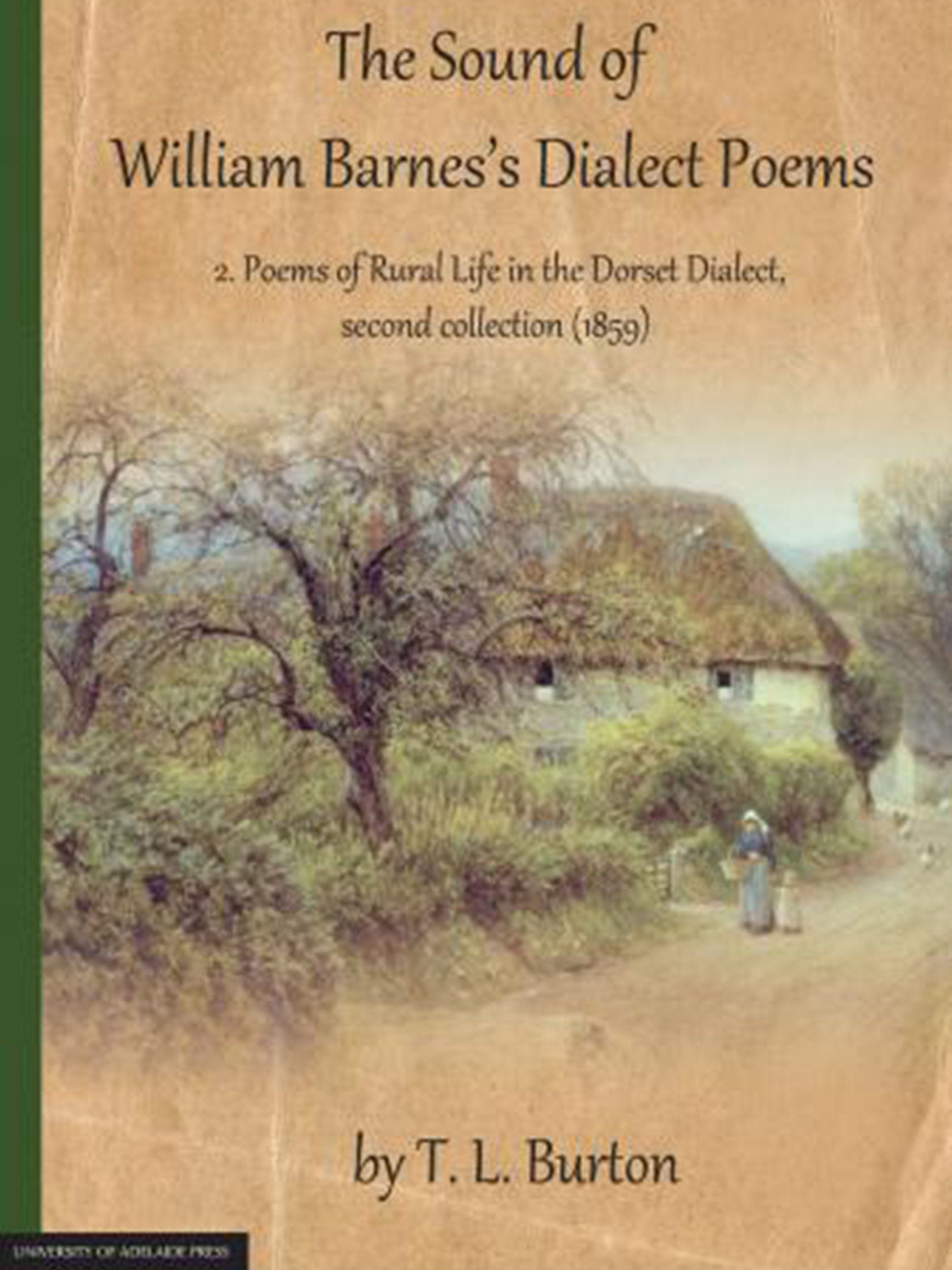
The Sound of William Barnes's Dialect Poems, 2 cover

You can play the audio files by clicking on them, or download your own copy by right-clicking the track link and choosing 'Save Link As...'.

Audio recordingsDuration
Track 1 Blackmwore maïdens1:54
Track 2 - My orcha'd in Lindèn Lea1:23
Track 3 - Bishop's Caundle3:55
Track 4 - Hay meäkèn—nunchen time3:06
Track 5 - A father out an' mother hwome2:23
Track 6 - Riddles5:45
Track 7 - Day's work a-done1:29
Track 8 - Light or sheäde0:50
Track 9 - The waggon a-stooded6:23
Track 10 - Gwaïn down the steps vor water2:24
Track 11 - Ellen Brine ov Allenburn2:11
Track 12 - The motherless child1:26
Track 13 - The leädy's tower6:52
Track 14 - Fatherhood3:45
Track 15 - The Maïd o' Newton2:04
Track 16 - Childhood1:43
Track 17 - Meäry's smile1:32
Track 18 - Meäry wedded2:06
Track 19 - The stwonen bwoy upon the pillar2:56
Track 20 - The young that died in beauty2:08
Track 21 - Fäir Emily of Yarrow Mill1:40
Track 22 - The scud2:32
Track 23 - Mindèn house2:33
Track 24 - The lovely maïd ov Elwell Meäd2:03
Track 25 - Our fathers' works1:54
Track 26 - The wold vo'k dead3:14
Track 27 - Culver Dell and the squire2:56
Track 28 - Our be'thplace2:07
Track 29 - The window freämed wi' stwone2:09
Track 30 - The waterspring in the leäne1:26
Track 31 - The poplars1:44
Track 32 - The linden on the lawn3:09
Track 33 - Our abode in Arby Wood0:55
Track 34 - Slow to come, quick agone0:51
Track 35 - The vier-zide2:15
Track 36 - Knowlwood3:33
Track 37 - Hallowed pleäces4:05
Track 38 - The wold wall1:48
Track 39 - Bleäke's house4:32
Track 40 - John Bleäke at hwome at night2:03
Track 41 - Milkèn timen1:39
Track 42 - When birds be still1:53
Track 43 - Ridèn hwome at night2:31
Track 44 - Zun-zet1:51
Track 45 - Spring1:18
Track 46 - The zummer hedge2:17
Track 47 - The water crowvoot1:49
Track 48 - The lilac1:51
Track 49 - The blackbird [II]1:39
Track 50 - The slantèn light o' fall2:27
Track 51 - Thissledown0:54
Track 52 - The may-tree1:14
Track 53 - Lydlinch bells2:41
Track 54 - The stage coach2:15
Track 55 - Wayfeärèn2:32
Track 56 - The leäne4:29
Track 57 - The raïlroad [I]1:13
Track 58 - The raïlroad [II]0:55
Track 59 - Seats1:56
Track 60 - Sound o' water1:26
Track 61 - Trees be company2:09
Track 62 - A pleäce in zight1:43
Track 63 - Gwaïn to Brookwell3:50
Track 64 - Brookwell4:03
Track 65 - The shy man3:45
Track 66 - The winter's willow2:48
Track 67 - I know who1:36
Track 68 - Jessie lee1:52
Track 69 - True love2:38
Track 70 - The beän-vield2:04
Track 71 - Wold friends a-met2:59
Track 72 - Fifehead1:44
Track 73 - Ivy Hall2:02
Track 74 - False friends-like1:00
Track 75 - The bachelor2:17
Track 76 - Married peäir's love-walk2:40
Track 77 - A wife apraïs'd2:09
Track 78 - The wife a-lost1:36
Track 79 - The thorns in the geäte1:46
Track 80 - Angels by the door1:47
Track 81 - Vo'k a-comèn into church1:41
Track 82 - Woone rule1:20
Track 83 - Good Meäster Collins3:17
Track 84 - Herrenston3:05
Track 85 - Out at plough2:42
Track 86 - The bwoat1:46
Track 87 - The pleäce our own ageän1:50
Track 88 - Eclogue: John an' Thomas3:37
Track 89 - Pentridge by the river2:13
Track 90 - Wheat2:51
Track 91 - The meäd in june3:13
Track 92 - Early risèn0:57
Track 93 - Zelling woone's honey to buy zome'hat sweet2:48
Track 94 - Dobbin dead3:12
Track 95 - Happiness2:15
Track 96 - Gruffmoody Grim3:41
Track 97 - The turn o' the days2:06
Track 98 - The sparrow club2:44
Track 99 - Gammony Gaÿ4:05
Track 100 - The heäre2:49
Track 101 - Nanny Gill2:09
Track 102 - Moonlight on the door1:47
Track 103 - My love's guardian angel1:52
Track 104 - Leeburn Mill1:38
Track 105 - Praise o' Do‘set3:03

Recorded by T L Burton.

This series, developed from Tom Burton’s groundbreaking study, William Barnes’s Dialect Poems: A Pronunciation Guide (The Chaucer Studio Press, 2010), sets out to demonstrate for the first time what all of Barnes’s dialect poems would have sounded like in the pronunciation of his own time and place. Every poem is accompanied by a facing-page phonemic transcript and by an audio recording freely available from this website. The free PDF includes links to the audio files as well.

This book is the second volume of a series. See Volume 1 and Volume 3.

About the author

T L Burton is an Emeritus Professor in the Discipline of English and Creative Writing at Adelaide University. He taught for nearly forty years at the University of Adelaide. He is the author of William Barnes’s Dialect Poems: A Pronunciation Guide (The Chaucer Studio Press, 2010), and co-editor, with K. K. Ruthven, of The Complete Poems of William Barnes, 3 volumes (Oxford University Press). He has spoken on Barnes at several international conferences and at more than two dozen universities in the UK, USA, and Australia, and has put on readings from Barnes’s poems at four Adelaide Fringe Festivals (2009–2012). 

Reviews

From reviews of Volume 1 of The Sound of William Barnes’s Dialect Poems

This volume is the first of a series designed to supplement Burton’s William Barnes’s Dialect Poems: A Pronunciation Guide (2010) ... Together, these volumes constitute a monumental project which ‘sets out to provide a phonemic transcript and an audio recording of each individual poem in Barnes’s three collections of Poems of Rural Life in the Dorset Dialect’ ...

The driving force behind this project is Burton’s enthusiasm for Barnes’s work and his desire to bring these poems to life for the widest possible audience ... Recordings of Burton’s lively, animated and accurate readings of each poem are provided on a free website hosted by Adelaide University Press, as is a free, searchable pdf version of the text ...

The Sound of William Barnes’s Dialect Poems can ... be used by those without access to the Pronunciation Guide; so the pdf version effectively constitutes a free, comprehensive guide to Barnes’s pronunciation, something for which both the author and the publisher are to be applauded.

Joan C. Beal in Anglia