Sustainability on campus

Sustainability on campus

Creating a future-ready, sustainable campus environment

Adelaide University is focused on building a more sustainable environment across all of our campuses. Our progress is guided through strong climate commitments, ethical practices, and clear governance. We are taking practical, transparent steps to reduce our impact and support a thriving, low-carbon future for our community.


Adelaide University is proud to announce its commitmentto Net Zero emissions by 2050 and its intention to join the Race to Zero, a global initiative led by the United Nations to accelerate climate action. This campaign unites businesses, cities, regions, financial institutions, and educational organisations worldwide in taking steps to achieve a healthier, fairer future in line with the Paris Agreement.

Adelaide University pledges to:

  • Reduce emissions across all emission scopes guided by the latest climate science.
  • Develop and implement transparent action plans with robust near-term and long-term targets.
  • Report progress annually, ensuring accountability and continuous improvement.
Race to zero

Through this commitment, Adelaide University reinforces its dedication to sustainability and leadership in climate action, working collaboratively to create a thriving, zero-carbon world for future generations.

Adelaide University is currently in the process of developing a Climate Transition Action Plan that will be available in 2027, and will report on sustainability initiatives. The University will disclose greenhouse gas emissions and progress towards this target in the institution’s Annual Report.

Our Endowment Fund plays an invaluable role in supporting the core needs of our students and researchers, enabling them to make ground-breaking contributions to local, national and international communities.

Endowed funds are amongst Adelaide University’s most important sources of philanthropic support. Secured in perpetuity, they underwrite core activities and programs including scholarships, professorial chairs and fellowships, and the maintenance of our historic buildings and heritage. Donors are able to establish individual endowment funds, or contribute to the University Endowment Fund. As it grows, the Endowment Fund strengthens the University and allows for autonomy and reliable planning. The Endowment Fund provides a flow of predictable revenue, enabling the University to be less reliant on volatile funding sources such as grants and enrolments.

It is important that the way the Endowment Fund is managed reflects our values.

There are circumstances in which the University believes it is appropriate to exclude certain exposures from the Endowment Fund’s portfolio on ethical grounds. The Endowment Fund’s stated exclusions, therefore, include allowances and tolerance levels to account for such nuances.

The Endowment Fund policy excludes public equities and corporate bonds issued by:

  • Any listed company that derives 10% or more of total revenue from the ownership and exploitation of its fossil fuel reserves, including thermal coal, oil, and gas. Adelaide University may consider an exemption where a company that is actively transitioning to renewables exceeds 50% of revenue from renewables.
  • Any listed company that manufactures tobacco products.
  • Any listed company that manufactures controversial weapons (including components produced exclusively for use in such weapons), such as cluster munitions, biological or chemical weapons, and land mines.

Read our Endowment Fund Policy.

The University Finance Committee, a Standing Committee of the University’s Council, oversees all investment related activities regarding the Funds investment profile, providing recommendations of the strategic asset allocation and investment objectives to the University Council for approval. An Annual Responsible Investment Disclosure will become available on this website for the 2026 calendar year in 2027.

The University supports leading practice in responsible fund management and selects those who are signatories to UN supported Principles for Responsible Investment and/or a member of the Responsible Investment Association Australasia.

Sustainable procurement is essential to the University’s commitment to fairness, accountability, and transparency. The way we purchase goods and services has significant social, environmental, and economic impacts—both within our community and across the broader value chain. By embedding responsible procurement practices into every decision we make, we ensure that our investments create long‑term value, uphold our ethical standards, and contribute to meaningful positive change.

We prioritise fair and equitable practices, making procurement decisions that benefit all parties and support opportunities for Aboriginal and Torres Strait Islander businesses and social enterprises. Our staff demonstrate accountability through informed, evidence‑based decisions and a commitment to continual improvement. We promote transparency by maintaining open communication, clear documentation, and defensible processes.

Ensuring value for money means looking beyond the initial price. We consider whole‑of‑life costs, fitness for purpose, risk, and social and environmental outcomes, aiming for the right balance of economy, efficiency, and effectiveness.

We practise responsible procurement by prioritising ethical, environmental, social, and economic sustainability, and by building long‑term, inclusive relationships with Aboriginal and Torres Strait Islander suppliers.

The University also actively manages risk by assessing potential impacts on health and safety, commercial outcomes, reputation, modern slavery and legal compliance. These considerations are embedded in all procurement activities and aligned with our overarching policy frameworks.

Looking ahead, sustainable procurement enables us to address emerging challenges and expectations—such as improved supplier reporting on emissions, prioritising low‑carbon and products designed for circularity, and fostering procurement practices that reduce waste and improve environmental performance.

By embedding these principles into staff training and induction, we equip our University community to make procurement choices that reflect our values and contribute to a more sustainable and equitable future.

Read our Procurement Policy.

University Council

University Council

Adelaide University Executive

Adelaide University Executive

Sustainability Steering Group

Sustainability Steering Group

The Sustainability Steering Group meet quarterly to provide oversight of sustainability risks and opportunities and monitor the progress of goals and targets, reporting to the Adelaide University Executive.

Membership of this governance group will include academics with sustainability expertise, professional staff responsible for delivering sustainability initiatives, and those charged with associated reporting and disclosures.

The Sustainability Steering Group reports to the Adelaide University Executive, with central decisions, investments and reports sent to the University’s Council for approval in line with existing delegations of authority.

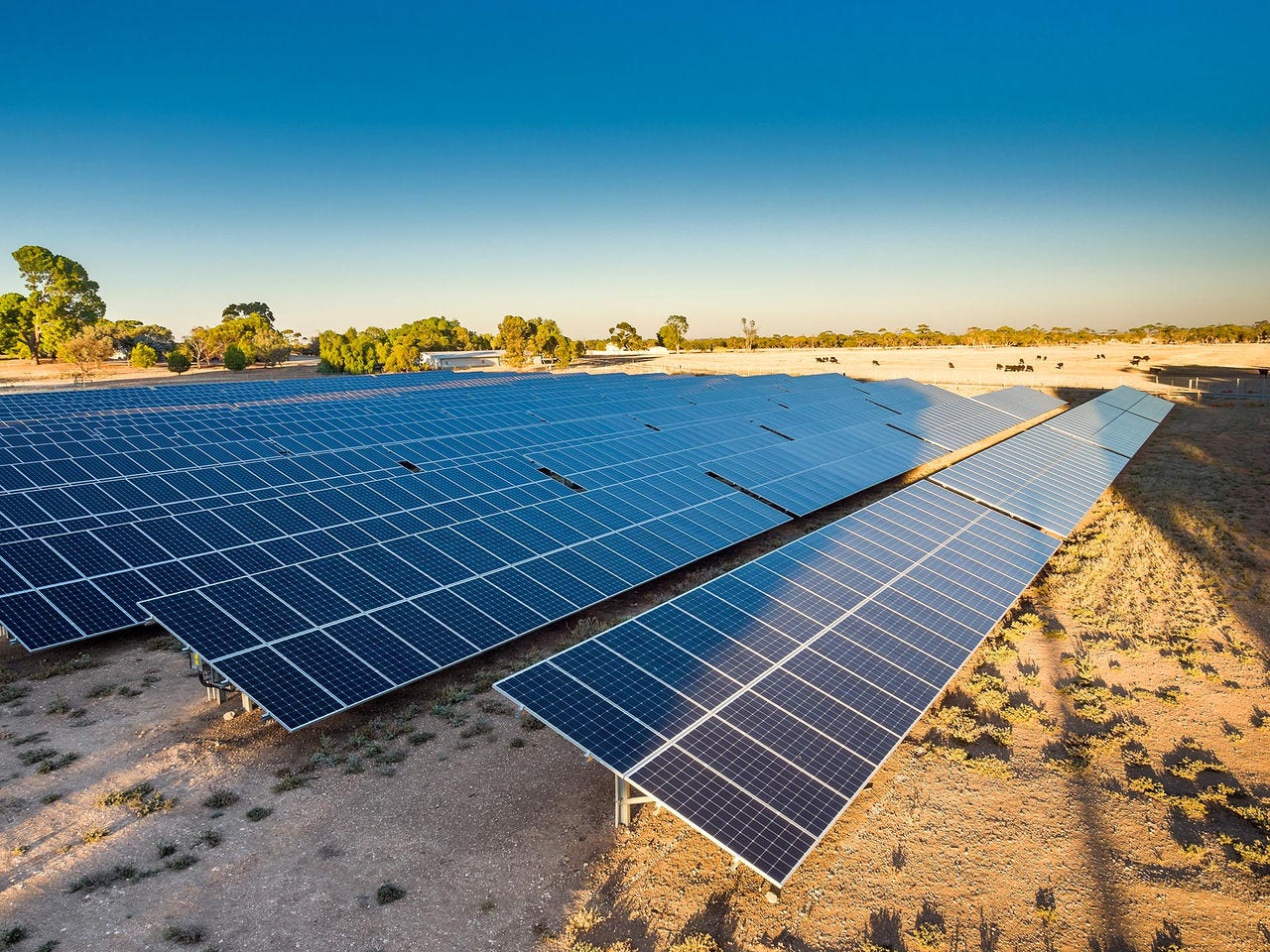
We have installed thousands of solar panels on rooftops across our campuses and two ground-mounted solar systems, to power our campuses, reduce emissions and reliance on grid electricity. Across our sites, we have a total of 3.5MW of solar generation capacity installed on site.

At our Roseworthy Campus, we have a solar farm with 3,200 solar panels that charge a hybrid battery storage system – a combination of lithium-ion and vanadium flow batteries. This system generates 42% of the campus's energy needs.

Solar farm