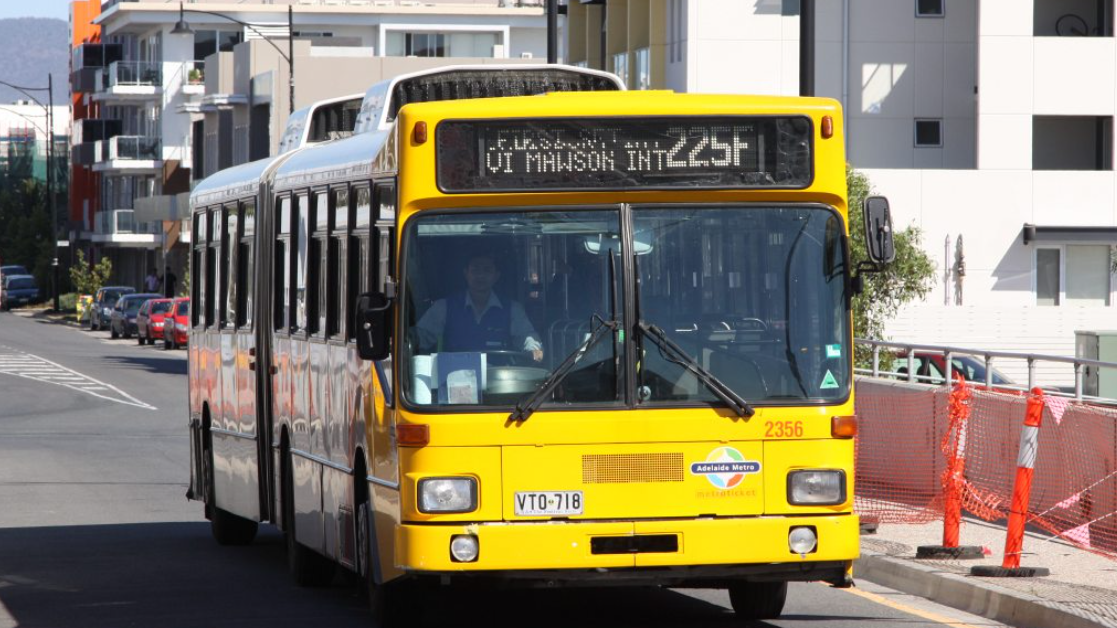
Researchers have demonstrated how an on-demand autonomous shuttle bus system could significantly improve transport efficiency in Adelaide’s northern suburbs, reducing travel times and making it easier for commuters to connect with major transport hubs.
An Adelaide University study has explored how driverless shuttle buses could operate in the Mawson Lakes area, linking local destinations such as the Mawson Lakes town centre and the university campus with the Mawson Lakes Interchange.
Using a combination of community surveys and advanced computer simulations, the researchers designed a theoretical system that dynamically plans routes and schedules driverless buses based on passenger demand.
Lead researcher Dr Li Meng, a lecturer in transport, logistics and supply chain management, said autonomous shuttles could play a key role in solving the ‘last-mile’ problem – the gap between public transport stations and people’s final destinations.
“Many people find it difficult to access convenient transport for the final stage of their journey,” Dr Meng said.
“An on-demand autonomous shuttle service could connect passengers quickly from transport interchanges to workplaces, homes or campuses, improving both convenience and efficiency.”
Using travellers’ pick-up and drop-off inputs, MATLAB-based artificial intelligence simulations determined efficient autonomous vehicle routes to minimise passenger travel time.
In the Mawson Lakes case study, simulations showed that three autonomous shuttle buses would be able to transport dozens of passengers between the interchange and surrounding destinations while minimising total travel distance and passenger waiting time.
To understand how people might respond to the technology, the researchers also conducted a survey of 100 potential users, including students, residents and visitors in the Mawson Lakes area. The results revealed strong public interest in autonomous transport.
More than 90% of participants said they would be willing to use autonomous vehicles as public transport in the future, citing convenience and environmental benefits as key reasons.
The survey also found most passengers would consider a waiting time of 5-10 minutes acceptable for an on-demand shuttle service.
However, the study identified several challenges that would need to be addressed before such systems could become a reality.
Safety and public trust remain significant concerns for some potential users, and researchers noted that public education and real-world demonstrations would be important for building confidence in autonomous technologies.
Technical challenges also remain, particularly around vehicle navigation in complex urban environments. Autonomous vehicles rely heavily on GPS signals, which can be disrupted in built-up areas or tunnels. The researchers suggest combining GPS with other sensors, including cameras, LiDAR and inertial measurement systems, to ensure reliable navigation.
“Despite these challenges, the findings suggest that autonomous shuttle buses could offer a sustainable and flexible transport option for low-density cities like Adelaide,” according to Dr Meng.
The researchers say the next step is to explore more advanced algorithms, refine route allocation strategies and test autonomous shuttle systems in real-world conditions.
“Our results show that an on-demand autonomous shuttle system is technically feasible and could significantly improve urban mobility.
“With further research and testing, this type of service could become an important part of future public transport networks.”